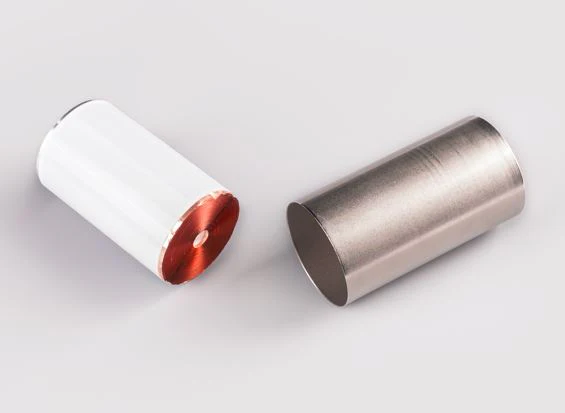

Dry 85120 Pouch Cell without Electrolyte (120mm x 85 mm), 5Ah - DPC85120
| Battery Type | Material Type | Testing Voltage Window (V) | Electrolyte Filling Amount (Ah/g) | Inner Resistance as Reference (mΩ) |
| Dry 85120 Pouch Cell 5 Ah |
LFP + Graphite | 2.5 - 3.65 | 4.5 | ≤ 18 |
| NCM523 + Graphite | 3.0 - 4.3 | 3.5 | ≤ 15 | |
|
NFMO + Hard Carbon (for sodium-ion battery) |
1.5 - 4.0 | 8.0 | ≤ 15 |
The separator used in the 85120 dry pouch cell is PP membrane (eg: Lib-PP6025).
Notes:
- As for graphite electrode sheet, the active material portion is 93.2%, and area density for double side is 12.6 mg/cm2. The compaction density is 1.4 g/cm3.
- As for the LiFePO4 (LFP) electrode sheet, the active material portion is 95.4%, and area density for double side is 27 mg/cm2. The compaction density is 2.3 g/cm3.
- As for the NCM523 electrode sheet, the active material portion is 95.5%, and area density for double side is 23 mg/cm2. The compaction density is 3.3 g/cm3.
- As for the NFMO (NaNi1/3Fe1/3Mn1/3O2) electrode sheet, the active material portion is 95.5%, and area density for double side is 28.6 mg/cm2. The compaction density is 2.8 g/cm3
- As for the Hard Carbon (Kuraray Type2) electrode sheet, the active material portion is 92%, and area density for double side is 12.68 mg/cm2. The compaction density is 0.9 g/cm3
Testing Procedures:
- Electrolyte Filling with recommended amount in glovebox.
- First Time Aging : 45°C, aging time ≥ 15h in a oven.
- Formation conditions: 45°C, 5 min rest; 0.02C constant current charging (10% theoretical capacity or 5 h); 0.1C constant current charging (30% theoretical capacity, 3 h); 5 min rest; total capacity is 40% or 8 h; Hot Press (eg: MSK-131-HS8) with a pressing force of 3.5 kg/cm2
- Second Time Aging: 45°C, aging time ≥ 24h in a oven
- Battery Analyzer for charging and discharging.
Application:
These prototype pouch cell can be used to compare various electrode materials in the same cell structure, but also be useful for studying the electrolyte filling, distribution, and wetting.
Therefore the ultrasonic scanning imaging systems are good tools to study the above fundamental projects.
| UBSC-DTBT | UBSC-DT10 | UBSC-LD50 |
 |
 |
 |
Original: $398.00
-65%$398.00
$139.30Product Information
Product Information
Shipping & Returns
Shipping & Returns
Description
| Battery Type | Material Type | Testing Voltage Window (V) | Electrolyte Filling Amount (Ah/g) | Inner Resistance as Reference (mΩ) |
| Dry 85120 Pouch Cell 5 Ah |
LFP + Graphite | 2.5 - 3.65 | 4.5 | ≤ 18 |
| NCM523 + Graphite | 3.0 - 4.3 | 3.5 | ≤ 15 | |
|
NFMO + Hard Carbon (for sodium-ion battery) |
1.5 - 4.0 | 8.0 | ≤ 15 |
The separator used in the 85120 dry pouch cell is PP membrane (eg: Lib-PP6025).
Notes:
- As for graphite electrode sheet, the active material portion is 93.2%, and area density for double side is 12.6 mg/cm2. The compaction density is 1.4 g/cm3.
- As for the LiFePO4 (LFP) electrode sheet, the active material portion is 95.4%, and area density for double side is 27 mg/cm2. The compaction density is 2.3 g/cm3.
- As for the NCM523 electrode sheet, the active material portion is 95.5%, and area density for double side is 23 mg/cm2. The compaction density is 3.3 g/cm3.
- As for the NFMO (NaNi1/3Fe1/3Mn1/3O2) electrode sheet, the active material portion is 95.5%, and area density for double side is 28.6 mg/cm2. The compaction density is 2.8 g/cm3
- As for the Hard Carbon (Kuraray Type2) electrode sheet, the active material portion is 92%, and area density for double side is 12.68 mg/cm2. The compaction density is 0.9 g/cm3
Testing Procedures:
- Electrolyte Filling with recommended amount in glovebox.
- First Time Aging : 45°C, aging time ≥ 15h in a oven.
- Formation conditions: 45°C, 5 min rest; 0.02C constant current charging (10% theoretical capacity or 5 h); 0.1C constant current charging (30% theoretical capacity, 3 h); 5 min rest; total capacity is 40% or 8 h; Hot Press (eg: MSK-131-HS8) with a pressing force of 3.5 kg/cm2
- Second Time Aging: 45°C, aging time ≥ 24h in a oven
- Battery Analyzer for charging and discharging.
Application:
These prototype pouch cell can be used to compare various electrode materials in the same cell structure, but also be useful for studying the electrolyte filling, distribution, and wetting.
Therefore the ultrasonic scanning imaging systems are good tools to study the above fundamental projects.
| UBSC-DTBT | UBSC-DT10 | UBSC-LD50 |
|
|
|
|